North American Safety Valve Industries, Inc.North American Safety Valve Industries, Inc.North American Safety Valve Industries, Inc.
Choosing a reliable hydraulic relief valve supplier requires more than comparing prices or catalog images. Global buyers must examine pressure ratings, flow capacity, response stability, materials, testing methods, and technical support. A valve may look suitable on paper. Yet, it can perform poorly when oil temperature changes, contamination increases, or pressure spikes occur repeatedly.
Herbert E. Merritt, a respected hydraulic systems author, wrote, “The design of a hydraulic control system must begin with a clear understanding of its requirements.” This principle remains practical today. A dependable supplier should explain how each hydraulic relief valve performs under real operating conditions. Buyers should request pressure-flow curves, calibration records, material details, and replacement guidance. Clear documentation matters, especially when equipment crosses borders and serves different industries.
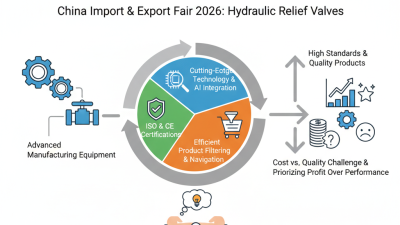
This guide reviews ten leading hydraulic relief valve suppliers for international purchasers. It considers product range, manufacturing experience, customization, quality control, delivery capability, and after-sales service. Some suppliers excel in mobile machinery. Others serve industrial presses, injection molding systems, or offshore equipment. The best choice depends on the application, not reputation alone.
No ranking is perfect. A supplier with strong engineering may offer slower delivery. Another may provide excellent availability but limited customization. Buyers should question attractive promises and verify the details. Small differences can matter. A correctly selected valve can protect pumps, cylinders, piping, and operators from damaging overpressure. A poor match can create noise, heat, leakage, and expensive downtime.
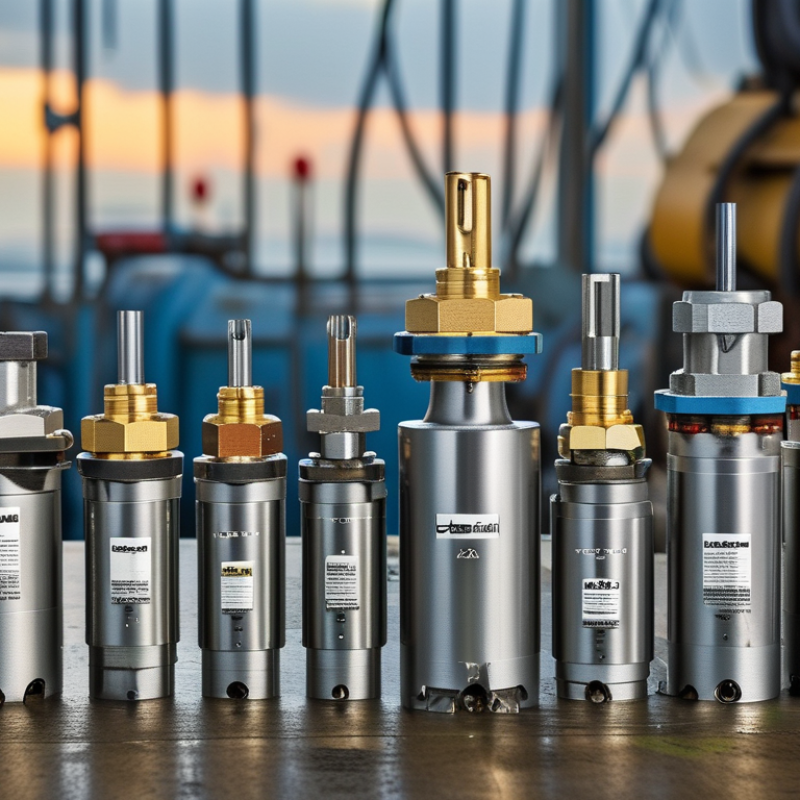
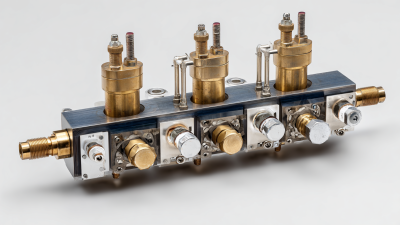
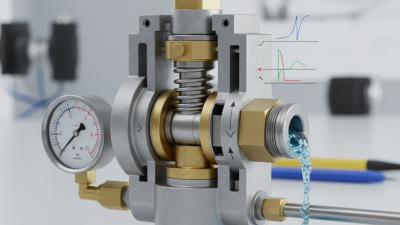
Hydraulic relief valves protect circuits from excessive pressure. They open when pressure reaches a preset limit. Fluid then returns to the tank or a safer flow path. This action reduces risks to pumps, hoses, actuators, and seals. In practical maintenance work, a correctly adjusted valve can prevent sudden stoppages and expensive component damage. Yet protection is not the same as efficiency. A valve set too low may cause weak actuator movement. A valve set too high can hide serious design problems. Good selection begins with pressure, flow rate, fluid type, temperature, and connection standards.
Tips: Measure actual operating pressure, not only catalog values. Check the valve during cold starts and heated operation. Confirm whether the system needs direct-acting, pilot-operated, or cartridge construction. Direct-acting models respond quickly and suit compact, lower-flow circuits. Pilot-operated designs manage higher flow with less pressure variation. Cartridge valves save space inside integrated manifolds. Selection still demands judgment. I have seen specifications copied from older machines, even when the working cycle had changed. That shortcut created noise, heat, and repeated seal failures.
These valves support construction equipment, agricultural machinery, factory presses, marine systems, and energy installations worldwide. Global buyers should verify thread forms, flange dimensions, pressure units, and fluid compatibility before ordering. Regional safety expectations can also differ. Request clear test reports, material details, adjustment ranges, and installation guidance from qualified suppliers. Do not rely on appearance alone. A compact valve may still produce substantial heat when poorly sized. Regular inspection should include leakage, vibration, pressure drift, and contamination. Some failures begin quietly, and operators may notice them too late.
| Rank | Supplier Profile | Recommended Valve Type | Primary Function | Typical Pressure Range | Common Connection Options | Global Application Focus | Key Buyer Evaluation Criteria |
|---|---|---|---|---|---|---|---|
| 1 | Industrial General-Purpose Profile | Direct-acting relief valve | Limits maximum system pressure by diverting excess flow to the tank. | Approximately 50–350 bar, depending on design and size | Threaded, cartridge, or subplate mounting | Machine tools, presses, material-handling equipment, and industrial power units | Set-pressure accuracy, flow capacity, response time, material compatibility, and test documentation |
| 2 | High-Flow Mobile Equipment Profile | Pilot-operated relief valve | Controls high flow with lower pressure override and improved stability. | Approximately 140–420 bar | SAE flange, threaded, and manifold-mounted connections | Excavators, loaders, cranes, agricultural machinery, and forestry equipment | Flow rating, shock resistance, contamination tolerance, thermal performance, and field serviceability |
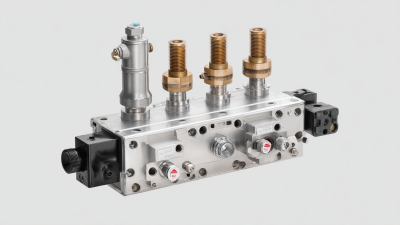
| 3 | Compact Cartridge Valve Profile | Screw-in cartridge relief valve | Provides compact pressure protection inside an integrated manifold or block. | Approximately 70–350 bar | Standardized cavity and screw-in cartridge formats | Compact power packs, lifting systems, vehicle hydraulics, and battery-powered equipment | Cavity dimensions, interchangeability, leakage rate, adjustment method, and spare availability |
| 4 | Pressure-Reducing Circuit Profile | Pressure-reducing and relief valve | Maintains a lower downstream pressure while protecting the secondary circuit. | Approximately 20–315 bar | Threaded, modular, and manifold-mounted formats | Clamping systems, auxiliary circuits, robotics, and automated production lines | Downstream pressure stability, minimum flow, sensitivity to inlet pressure, and adjustment range |
| 5 | Load-Sensing and Energy-Efficient Profile | Remote-piloted or proportional relief valve | Adjusts pressure remotely to match operating demand and reduce heat generation. | Approximately 100–350 bar | Subplate, flange, and pilot-line connections | Variable-displacement pump systems, injection machinery, presses, and energy-conscious mobile equipment | Remote control compatibility, hysteresis, pressure override, electrical interface, and fail-safe behavior |
| 6 | Fast-Response Shock Protection Profile | Cross-port relief and anti-shock valve | Protects actuators and directional circuits from transient pressure spikes. | Approximately 100–420 bar | Inline, subplate, and integrated actuator mounting | Winches, mobile actuators, steering systems, rotating machinery, and hydraulic motors | Cracking pressure, peak-flow handling, response time, damping, and protection against cavitation |
| 7 | Water-Based Fluid Profile | Relief valve for water-containing hydraulic fluids | Controls pressure where standard petroleum-based hydraulic oil is unsuitable. | Commonly up to approximately 250 bar, subject to fluid and design | Stainless-steel or corrosion-resistant threaded and flange connections | Food processing, offshore equipment, steel plants, marine systems, and environmentally sensitive installations | Corrosion resistance, seal compatibility, fluid viscosity, hygienic requirements, and external environmental rating |
| 8 | Marine and Offshore Profile | Corrosion-resistant direct-acting or pilot-operated valve | Provides reliable overpressure protection in saltwater, vibration, and temperature-exposed environments. | Approximately 100–350 bar | Flanged, threaded, and welded piping interfaces | Deck machinery, marine steering, offshore cranes, subsea support systems, and shipboard power units | Salt-spray resistance, vibration testing, documentation, coating system, and applicable marine approvals |
| 9 | High-Pressure Industrial Profile | High-pressure pilot-operated relief valve | Protects high-pressure pumps, actuators, and circuits from overload conditions. | Approximately 250–700 bar, depending on product construction | High-pressure threaded, SAE flange, and block-mounted connections | Hydrostatic test systems, steel processing, heavy presses, mining, and specialized industrial machinery | Pressure-cycle life, fatigue resistance, flow-induced vibration, certified testing, and safety margin |
| 10 | OEM and Custom Manifold Profile | Custom relief valve or integrated valve manifold | Combines pressure protection with application-specific circuit integration. | Defined by system design; commonly 50–420 bar | Custom manifolds, cartridge cavities, subplates, and SAE flange ports | Special-purpose machinery, automation, renewable-energy equipment, transport systems, and OEM production | Engineering support, CAD compatibility, prototype capability, quality systems, customization lead time, and lifecycle supply |