North American Safety Valve Industries, Inc.North American Safety Valve Industries, Inc.North American Safety Valve Industries, Inc.
Choosing the right pressure valve for global sourcing is not simply a matter of comparing prices. It requires practical judgment, technical evidence, and careful supplier evaluation. A valve may look suitable in a catalogue, yet fail when exposed to high pressure, corrosive media, repeated cycling, or extreme temperatures. The wrong material can create leakage, maintenance delays, and expensive production losses.
Philip L. Skousen, author of Valve Handbook, emphasizes this principle: “Valve selection must match the service.” That short statement deserves serious attention. Buyers should confirm pressure rating, temperature range, flow requirements, connection type, sealing material, and expected operating cycles. They should also request test reports, traceability records, and quality certifications from the manufacturer. Standards such as API, ASME, ISO, and EN may apply, depending on the application and destination market. Local technical requirements still need verification.
Global sourcing adds another layer of risk. A supplier may offer fast delivery but provide weak documentation. Another may claim broad experience without showing relevant project records. Ask for dimensional drawings, inspection procedures, sample data, and after-sales support. Check how the pressure valve performs under real conditions, not only under laboratory claims. Small details matter. A scratched seat, unclear marking, or missing certificate can delay customs clearance or installation.
There is no perfect sourcing formula. I have seen buyers focus too heavily on unit cost. That approach often overlooks failure costs. A better decision balances safety, service life, compliance, logistics, and supplier reliability. Sometimes the cheapest valve is the most expensive choice. That possibility should remain visible throughout the purchasing process.
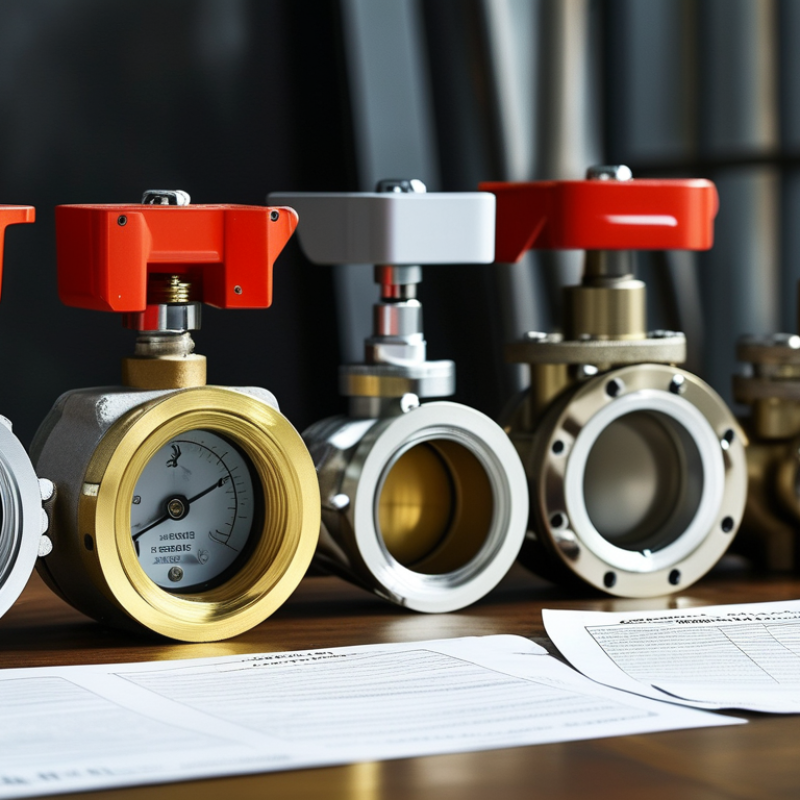
Global sourcing begins with classification, not price comparison. A safety valve releases excess pressure when a set point is exceeded. A pressure-reducing valve lowers upstream pressure for downstream equipment. A control valve continuously adjusts flow, while a check valve prevents reverse movement. Vacuum valves protect tanks during draining or cooling. These functions are not interchangeable.
Application changes the specification. Water-treatment lines often need corrosion-resistant bodies, reliable sealing, and easy maintenance. The UNESCO World Water Development Report 2024 states that agriculture accounts for about 70% of global freshwater withdrawals. Irrigation systems therefore demand stable pressure control across long pipelines and uneven terrain. Steam networks require temperature-rated materials and carefully sized relief capacity. Hydrogen service is more demanding. The IEA Global Hydrogen Review 2024 reported nearly 100 million tonnes of hydrogen demand in 2023, increasing attention on leakage control and material compatibility.
A useful sourcing sheet should record medium, pressure range, temperature, connection standard, flow rate, actuation, and failure position. It should also identify the applicable requirements, such as ISO 4126 for safety devices or ASME B16.34 for industrial valves. A recurring mistake is selecting by nominal diameter alone. That shortcut can create unstable control and premature seat damage. A neat spreadsheet can still mislead. Ask for test records, material certificates, calibration details, and pressure-cycle evidence. I would also challenge unclear “universal service” claims, because real installations rarely behave universally. Differences in water chemistry, ambient temperature, operator skill, and spare-part access can change the best valve type.
| Pressure Valve Type | Primary Function | Typical Pressure Range | Typical Temperature Range | Suitable Media | Typical Global Applications | Key Selection Criteria | Common Standards and Verification Points |
|---|---|---|---|---|---|---|---|
| Spring-Loaded Safety Relief Valve | Automatically releases excess pressure when the set pressure is reached, then reseats after pressure decreases. | Low vacuum service to approximately 420 bar, depending on design, size, and material. | Approximately −196°C to 538°C, depending on trim, seal, and body materials. | Steam, air, inert gases, liquids, hydrocarbons, and compatible corrosive fluids. | Boilers, pressure vessels, compressed-gas systems, thermal-fluid equipment, chemical processing, and power generation. | Set pressure, relieving capacity, blowdown, back pressure, fluid phase, seat tightness, discharge routing, and material compatibility. | Confirm applicable requirements such as ASME Section VIII, API 526/API 527, EN ISO 4126, or local pressure-equipment rules. Request certified set-pressure and capacity tests. |
| Pilot-Operated Pressure Relief Valve | Uses a pilot control system to provide accurate pressure protection with high capacity and reduced simmering. | Commonly used from approximately 10 bar to more than 400 bar, subject to the product design. | Approximately −46°C to 260°C for many industrial designs; special materials may extend this range. | Clean gases, steam, liquids, and selected process fluids that will not block the pilot circuit. | Large pipelines, gas transmission, refineries, petrochemical units, storage facilities, and high-capacity process systems. | Pilot stability, minimum differential pressure, back-pressure correction, filtration, response time, and maintenance access. | Check API 526, API 520, API 527, EN ISO 4126, sizing calculations, pilot material compatibility, and testing under the specified operating conditions. |
| Pressure-Reducing Regulator | Automatically reduces a higher upstream pressure to a controlled lower downstream pressure. | Inlet pressure commonly up to approximately 400 bar; outlet settings may range from millibar levels to hundreds of bar. | Approximately −40°C to 200°C for many industrial models. | Air, nitrogen, natural gas, steam, water, fuel gas, and compatible process fluids. | Gas distribution, industrial utilities, cleanroom systems, water treatment, burner trains, compressed-air networks, and process skids. | Inlet and outlet pressure, required flow, droop, lock-up pressure, noise, cavitation risk, fail position, and sensing-line arrangement. | Verify EN 334 or EN 16129 where applicable for gas regulators, regional gas codes, pressure class, leakage testing, and required overpressure protection. |
| Back-Pressure Regulator | Maintains a defined upstream pressure by opening when upstream pressure rises above the set point. | Commonly from low-pressure service to approximately 400 bar, depending on construction. | Approximately −40°C to 200°C for many standard industrial designs. | Gases, liquids, steam, fuel, chemical solutions, and process fluids. | Pump discharge systems, chemical dosing, filtration, gas separation, compressor discharge, and reactor pressure control. | Required upstream pressure, downstream pressure, flow coefficient, phase change, pulsation, valve stability, and shutoff behavior. | Confirm pressure-temperature ratings, leakage class, material certificates, flow-capacity calculations, and compatibility with any relief device installed downstream. |
| Differential Pressure Regulator | Maintains a constant pressure difference between two points in a system. | Typically used for differential settings from a few millibars to several bar; higher ranges are available for specialized systems. | Approximately −20°C to 180°C for many common designs. | Water, air, gas, hydraulic fluids, and compatible process liquids. | District heating, hydronic HVAC, pump protection, filtration, laboratory equipment, and process circulation loops. | Required differential pressure, sensing-point location, flow direction, response speed, pulsation, and minimum operating flow. | Check pressure class, control accuracy, pipe-size transition, local plumbing or mechanical codes, and calibration documentation. |
| Vacuum Breaker | Admits air or another approved gas when internal pressure falls below atmospheric pressure, preventing vacuum damage. | Designed for vacuum protection near atmospheric pressure; the allowable positive pressure varies by model. | Approximately −40°C to 200°C, depending on seal and body materials. | Water, wastewater, steam condensate, air, and compatible nonhazardous process fluids. | Storage tanks, pipelines, hot-water systems, steam condensate lines, irrigation networks, and vessel protection. | Vacuum-break set point, air-inlet capacity, contamination risk, installation orientation, drainage, and possible fluid discharge. | Verify vacuum-relief sizing, hygienic or potable-water requirements where relevant, corrosion resistance, and local tank or pipeline codes. |
| Pressure Vacuum Relief Valve | Protects low-pressure tanks from both excessive internal pressure and excessive vacuum. | Usually applied to atmospheric or low-pressure storage tanks; settings are often specified in mbar or kPa. | Approximately −40°C to 200°C, depending on materials and service. | Hydrocarbons, solvents, chemicals, water, and vapor-air mixtures compatible with the construction. | Fixed-roof storage tanks, chemical storage, fuel terminals, wastewater treatment, and low-pressure process vessels. | Normal venting, emergency venting, set pressure, set vacuum, vapor composition, fire exposure, condensation, and emissions control. | Review API 2000, ISO 28300, tank design code, emissions requirements, flame-arrestor compatibility, and certified flow capacity. |
| Rupture Disc | Provides non-reclosing overpressure protection through a designed burst membrane. | From very low differential pressure to several hundred bar, depending on disc design and temperature. | Approximately −196°C to 538°C or higher for specialized materials. | Clean or contaminated gases, liquids, steam, corrosive fluids, and multiphase process media. | Chemical reactors, pharmaceutical equipment, cryogenic systems, pressure vessels, piping, and explosion-risk processes. | Burst pressure, coincident temperature, vacuum resistance, fragment retention, fatigue cycles, installation torque, and replacement interval. | Check EN ISO 4126-2, ASME Section VIII requirements, burst-test certificates, manufacturing range, and whether a relief valve is installed in combination. |
| Pressure-Controlled Check Valve | Prevents reverse flow while opening or closing at a defined pressure differential or control condition. | Commonly used from vacuum service to approximately 420 bar, depending on body and connection design. | Approximately −196°C to 400°C, depending on seat, spring, and body materials. | Water, oil, gas, steam, cryogenic fluids, and compatible process media. | Pump discharge, compressor systems, boiler feedwater, cryogenic piping, hydraulic circuits, and process isolation. | Cracking pressure, reverse leakage, pressure drop, closing speed, water hammer, flow orientation, and installation position. | Confirm API 6D, API 594, EN 16767, or other applicable check-valve requirements; request shell, seat, and functional test records. |
| Automatic Pressure-Relief Regulator | Combines pressure regulation with automatic relief or shutoff functions to protect downstream equipment. | Commonly used in gas and utility systems from low pressure to approximately 100 bar, depending on configuration. | Approximately −40°C to 180°C for many standard designs. | Natural gas, LPG vapor, nitrogen, compressed air, and other clean compatible gases. | Gas inlet stations, appliance supply systems, industrial burner trains, laboratory gas distribution, and utility pressure reduction. | Normal and emergency flow, lock-up, overpressure shutoff, underpressure shutoff, reset method, venting, and hazardous-area requirements. | Verify EN 334, EN 14382, EN 16129, local gas regulations, pressure-test evidence, and the required safety integrity or shutoff class. |