Choosing the right Feed Pellet Mill begins with the material you plan to process, not the largest capacity listed in a brochure. A small farm using dry grain has different needs from a feed operation handling mixed ingredients with varying moisture. Pellet size, production volume, and daily operating hours all shape the choice. Details matter.
Before comparing models, identify your feed recipe and expected output per hour. Ask suppliers which die specifications suit your ingredients, and check whether the mill can maintain steady pellet quality at your intended production rate. Motor power, die access, spare-part availability, and cleaning requirements also deserve attention. A machine that is difficult to service may cost more time than its purchase price suggests. Request practical performance data for materials like yours, rather than relying only on a maximum-capacity figure.
Good selection also involves testing assumptions. A specification sheet may look convincing, yet actual output can change with moisture, particle size, and operator adjustments. If possible, review a demonstration or arrange a small trial before committing. Confirm what routine maintenance involves and how quickly common wear parts can be replaced. There is no single best mill for every buyer. The right choice balances consistent pellets, realistic capacity, dependable support, and a budget that includes ongoing operation. Some uncertainty remains until your own feed is tested.
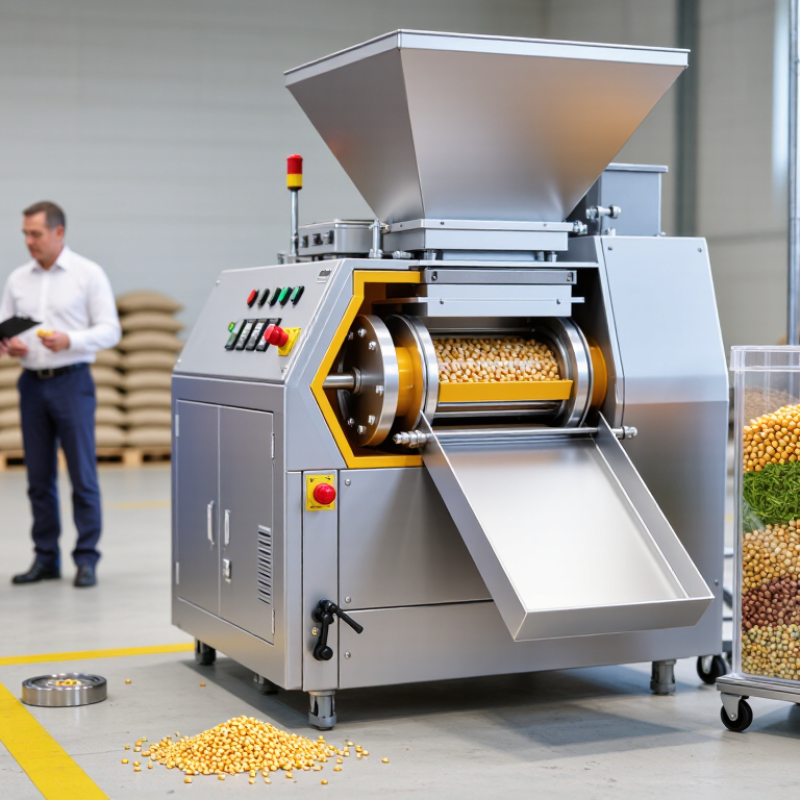
Estimate required throughput from the feed your operation will actually pellet, not a brochure’s maximum rating. Alltech’s Agri-Food Outlook 2024 estimated global feed production at 1.29 billion metric tonnes in 2023, including about 555 million tonnes of poultry feed. That scale shows why species and production mix matter. For a mill, calculate daily demand, divide by planned operating hours, then check whether the machine can sustain that rate with your recipe and die.
For example, 20,000 growing birds averaging 0.12 kg of feed each per day need 2.4 tonnes daily. Producing that over eight hours requires 0.3 tonnes per hour before cleaning, changeovers, and downtime. This is only a planning example: bird age, climate, and feeding program change consumption. Leave room for those interruptions.
For poultry, 2–4 mm pellets are a practical sizing range, but smaller die holes can reduce output. They increase resistance, and the result depends on die thickness, formulation, moisture, and conditioning. Small holes slow flow. Ask suppliers for measured capacity using your intended feed mix and pellet diameter, then run a production trial. I would not select a mill from daily tonnage alone; that estimate can look reassuring and still miss the bottleneck.
Choosing a feed pellet mill starts with production rhythm, not just rated output. A flat-die mill suits smaller batches, farm-level production, or frequent formula changes. Its simpler layout is easier to inspect, and die changes are generally more straightforward. That matters. Operators can pause, clean the feed path, and restart without coordinating a large continuous line. Yet output may fluctuate with moisture, grind size, and operator adjustment. It is not automatically the economical choice if batches grow.
A ring-die mill is usually better suited to steady, higher-volume production. Material enters a rotating die, where rollers press it through the holes. With stable conditioning and feeding, the system can deliver consistent throughput over long shifts. This design needs more space, careful setup, and maintenance planning; die and roller wear affect pellet shape and energy use. Continuous production only pays off when upstream grinding, mixing, and cooling can keep pace. A fast mill beside a slow mixer still waits.
Before choosing, compare realistic daily tonnage, batch size, changeover frequency, available labor, and service access. Ask for trials using your own formula and target pellet diameter, then record output, fines, and power consumption. I would not decide from catalogue capacity alone; real feed behaves differently. Small differences in moisture can change compression and durability. And operators matter. Pick the design your team can run steadily, not merely the one with the largest number on its nameplate.
How to Choose the Right Feed Pellet Mill?
Die compression ratio affects how firmly feed is compacted as it passes through the die. Common specifications span 1:8–1:12, but notation can be confusing. Confirm which dimension comes first: many technical references express the ratio as effective hole length divided by hole diameter, or L/D. A die near L/D 10 may suit some formulas, but it is not a universal setting. Grain-rich mash, fibrous forage, added fat, and moisture all change pellet formation. Too soft. Too much compression can raise resistance, heat, and motor load; too little may leave fragile pellets and excess fines.
Match the die to the formula, then verify performance under normal operating conditions. Record moisture, throughput, motor load, pellet durability, and fines after the line stabilizes. Change one variable at a time; otherwise, the result is hard to interpret. Alltech’s 2024 Agri-Food Outlook estimated global feed production at 1.29 billion metric tons in 2023. That scale makes repeatable process control valuable, but the report does not prescribe a die ratio. Start within the stated range, compare nearby options, and inspect pellets after cooling. A small trial may challenge the preferred setting. That is useful evidence, not a failure.
When comparing feed pellet mills, inspect the steam conditioner as carefully as the press. Mash commonly reaches 75–85°C before pelleting, but that range is not a universal target. Feed ingredients, moisture, steam quality, and retention time all affect the result. Measure temperature at the conditioner outlet with a calibrated probe, not by guessing from a warm pipe. Small details matter.
Look for even steam distribution and controls that let operators adjust flow and residence time. Dry, steady steam can help soften the mash; wet steam or poor mixing may leave hot and cool pockets. Numbers can mislead. Check the conditioned mash across several points, and record moisture alongside temperature. Too little conditioning may increase fines and press load, while excess heat or moisture can affect sensitive ingredients and pellet quality. There is no magic setting. Ask for a trial using your own formula and target throughput, then compare pellet durability, fines, and energy use. A neat test run is useful, but real production can be less tidy.
When choosing a feed pellet mill, assess what it delivers at the cooler, not just its rated output. Pellet durability index (PDI) measures the share of pellets remaining intact after a defined tumbling test; ASABE Standard S269.5 describes methods for evaluating pellet durability. Common mill benchmarks are about 90% PDI for poultry and 85% for pigs, but these are starting points, not universal species limits. Thomas and van der Poel’s review in Animal Feed Science and Technology (1996) explains why pellet quality depends on ingredients and processing, not equipment alone. Small details matter.
Track fines at the feeder as well as PDI at the mill. Poultry diets often need durable pellets to reduce sorting and wasted feed, while pig diets may require a different balance of hardness, size, and intake. Set targets using species, pellet diameter, transport distance, and feeder design; record the percentage of fines before and after delivery. A low PDI can signal weak conditioning, poor moisture control, or excessive handling. Yet a strong lab score can hide fines created during transport. That part is easy to miss. Compare samples from several production runs, and ask suppliers for test conditions, not just a single score.
