2026 How to Choose the Right Air Compressor Relief Valve for Your Needs?
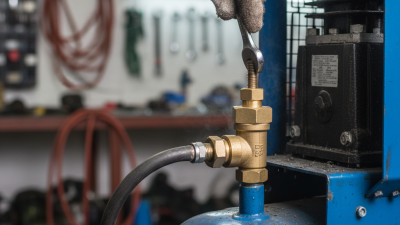
Choosing the right air compressor relief valve is critical for the safety and efficiency of your system. A relief valve prevents excessive pressure build-up, protecting both machinery and users. Understanding various design types and specifications is essential for finding the perfect fit for your needs.
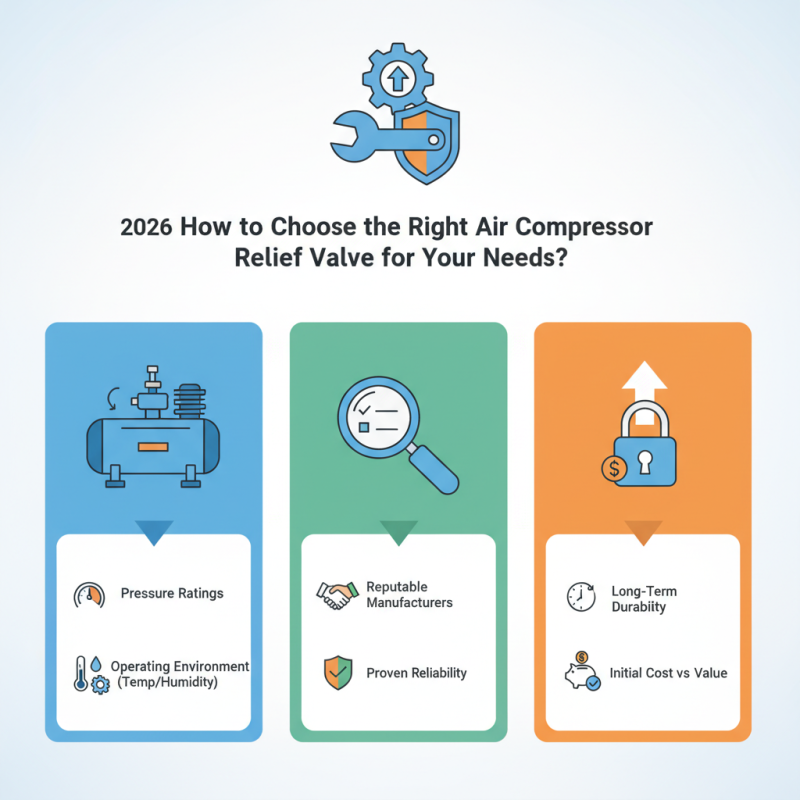
Consider the specific requirements of your air compressor. Each model has unique pressure ratings that your relief valve must match. Selecting a valve that doesn’t align can lead to failures or inefficiency. Moreover, be aware of the operating environment. Factors like temperature and humidity can affect valve performance.
Finally, while many manufacturers claim their products are the best, it’s essential to assess this with a critical eye. Look for valves that have proven reliability and come from reputable sources. It’s easy to overlook small details, but they often make a significant difference. Always think about long-term durability over initial cost. Your choice of air compressor relief valve could define the longevity of your equipment.
Types of Air Compressor Relief Valves and Their Applications
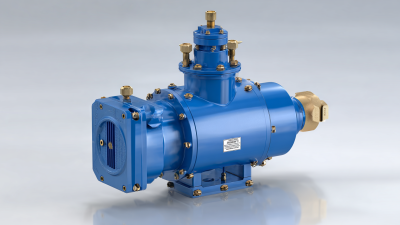
When selecting the right air compressor relief valve, understanding the types is crucial. Relief valves come in several designs, including spring-loaded, pilot-operated, and spill-back types. Each type serves specific applications based on required pressure settings and flow rates. For example, spring-loaded valves are simple and reliable. They are suitable for low-pressure systems where precision is less critical. However, they may not adapt well to fluctuating pressure scenarios.
Pilot-operated valves offer greater accuracy and efficiency. They work well in high-pressure environments, managing larger flow rates. These valves use a control signal to maintain the required pressure, making them ideal for industrial applications. Despite their advantages, they might require more complex installations, which can complicate maintenance. It’s essential to weigh the pros and cons based on your specific needs.
Spill-back valves provide flexibility by allowing excess air to return to the compressor. They are useful in systems where continuous operation is necessary. These valves can be more prone to wear and tear, necessitating regular inspections. Ultimately, the choice depends on your system's demands, and understanding the intricacies of each type can lead to a better decision.
Factors to Consider When Selecting a Relief Valve for Air Compressors
When selecting a relief valve for air compressors, several critical factors come into play. The first is the pressure rating. Relief valves must be capable of handling your compressor's maximum pressure. According to industry standards, a relief valve should be rated 10% above the compressor's maximum output to ensure safety and reliability.
Another crucial factor is the valve size. It must be appropriate for your airflow needs. An undersized valve can lead to excessive pressure build-up. A report from the Air Compressor Manufacturers Association indicates that a properly sized relief valve can improve efficiency by 20%. Oversizing, however, can cause cycling issues and wasted energy.
The materials used in the relief valve are important, too. Valves made from robust materials like stainless steel or brass can withstand corrosive environments. Regular maintenance and inspection are essential, as neglect can lead to valve failure. Many operators overlook these aspects, focusing solely on initial purchase costs. This could result in higher long-term operational costs and potential safety hazards.
Sizing the Air Compressor Relief Valve for Optimal Performance
When selecting an air compressor relief valve, sizing is crucial for ensuring optimal performance. A valve that is too large can lead to insufficient pressure control. On the other hand, a valve that is too small may not prevent over-pressurization effectively. The goal is to find the right balance.
To size a relief valve, you must consider several factors. First, evaluate the compressor's maximum pressure rating. This provides a baseline for selecting a valve that can handle the system's demands. You should also factor in the air consumption of your tools or devices connected to the compressor. Understanding the flow rate is vital. It determines how quickly the valve needs to operate under stress.
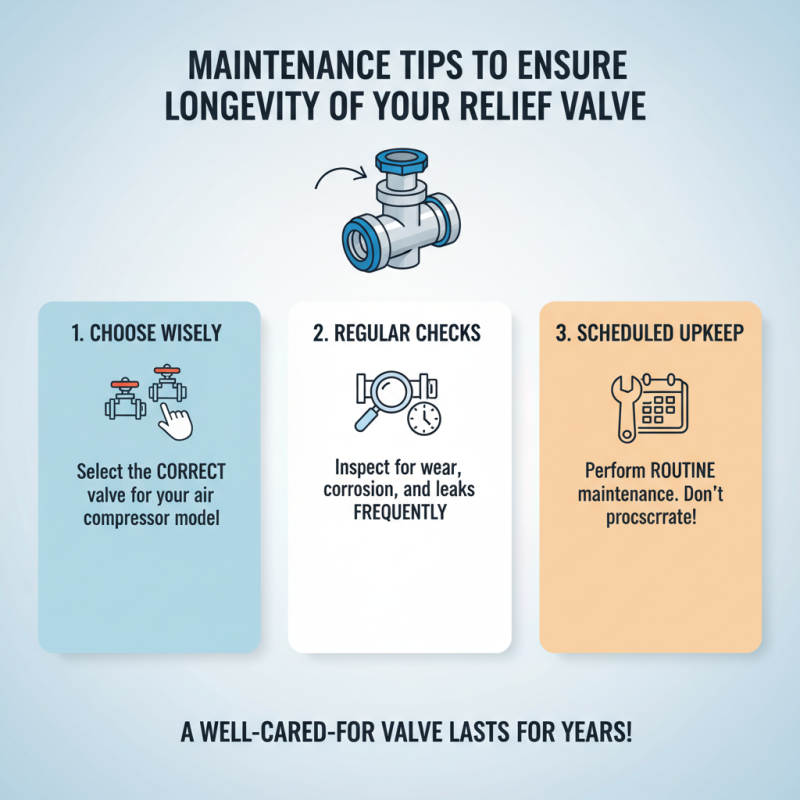
Many users underestimate the importance of regular maintenance. A poorly maintained valve can fail, causing dangerous situations. Always inspect for signs of wear or blockage. These problems can arise from contaminants in the air supply. Without regular checks, performance might decline over time, affecting your entire system. Making an informed choice about sizing and maintenance can significantly enhance efficiency and safety.
2026 How to Choose the Right Air Compressor Relief Valve for Your Needs? - Sizing the Air Compressor Relief Valve for Optimal Performance
| Valve Type |
Pressure Rating (psi) |
Flow Rate (CFM) |
Material |
Temperature Range (°F) |
Applications |
| Standard Relief Valve |
125 |
15 |
Brass |
-20 to 180 |
General Purpose |
| High-Pressure Relief Valve |
200 |
10 |
Stainless Steel |
-10 to 300 |
Industrial Applications |
| Adjustable Relief Valve |
150 |
20 |
Aluminum |
-20 to 250 |
Machinery and Equipment |
| Spring Loaded Relief Valve |
100 |
12 |
Bronze |
-20 to 220 |
Compressed Air and Gas |
Installation Best Practices for Air Compressor Relief Valves
When installing air compressor relief valves, it’s crucial to prioritize safety and efficiency. Proper installation prevents accidents and equipment damage. Start by selecting a location that is easily accessible. This will facilitate regular checks and maintenance. Ensure that the valve is mounted vertically to allow for optimal operation. Misalignment can lead to malfunctioning valves.
The connection points should be tight and secure. Loose fittings may cause leaks, leading to air loss. Use appropriate sealants for joint connections. It’s also important to position the relief valve at the highest point in the piping system. This positioning allows for effective discharge of excess pressure.
Consider the need for regular inspections as part of your routine. Even with proper installation, wear and tear can occur. Inspect for corrosion or physical damage. Replace any compromised components immediately. Monitoring your relief valve will help maintain the overall health of your compressor system. Remember, neglecting these steps can lead to serious operational issues.
Air Compressor Relief Valve Selection Data
This chart illustrates the ideal values to consider when selecting an air compressor relief valve. Each dimension reflects key attributes you should evaluate for your specific needs.
 North American Safety Valve Industries, Inc.