2026 Best Socks Printer for Global Buyers?
Choosing the best Socks Printer in 2026 is no longer a simple equipment comparison. Global buyers now assess productivity, print durability, energy use, software compatibility, and technical support together.
Industry data supports this shift. Grand View Research reports that the digital textile printing market reached billions of dollars in recent years, with double-digit growth expected through the decade. Smithers’ The Future of Digital Textile Printing to 2028 also highlights rising demand for shorter runs, customized products, and faster production cycles. These trends directly affect sock manufacturers, private-label brands, and online retailers.
The right machine should produce sharp images on cotton, polyester, bamboo, and blended yarns. It should also maintain reliable registration around curved sock surfaces. A useful test involves washing printed socks repeatedly, checking color fading, cracking, and hand feel. Small details matter. A beautiful sample can still hide costly maintenance.
Global buyers should examine printhead availability, ink certifications, voltage options, operator training, and local service coverage. ISO 9001 quality systems and recognized textile safety standards can strengthen supplier credibility, although certification claims require verification. The best Socks Printer is not always the fastest model. Sometimes, the cheaper machine becomes expensive after six months of downtime.
This guide compares practical specifications, supplier experience, operating costs, and real production risks. Some recommendations may remain debatable. That is intentional. Technology changes quickly, and buyer priorities are rarely identical. A factory producing 500 pairs daily needs different equipment from a startup testing personalized orders.
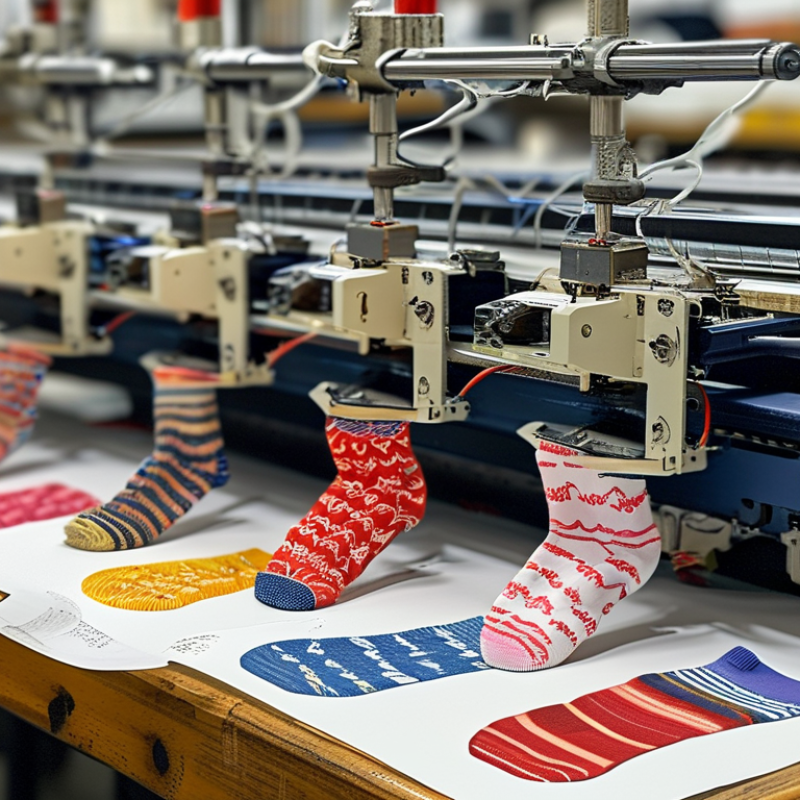
What Is a Socks Printer and How Does It Work?
What Is a Socks Printer and How Does It Work?
A socks printer is a digital textile machine designed for cylindrical, stretchable fabrics. It prints artwork directly onto a knitted sock, rather than attaching a separate label. The sock is placed over a rotating cylinder or fitted onto a specialized support. Software then adjusts the design for stretching, toe curves, and heel placement. Ink is applied in controlled passes, followed by heat or ultraviolet curing.
The process looks simple, but alignment is not. A slight fabric shift can blur stripes or move a logo several millimeters. Many machines use water-based pigment or reactive inks, depending on the fiber. Cotton, polyester, and blended yarns may require different pretreatment and curing settings. According to Grand View Research’s 2024 report, the global digital textile printing market was valued at about USD 2.3 billion in 2023. It is projected to grow at approximately 12% annually through 2030. This growth reflects demand for short runs, customized products, and reduced sampling waste. Yet, digital printing does not remove every production problem. Color consistency still depends on fabric tension, humidity, and operator control.
Tips: Request a wash-test report before purchasing. Check print resolution on black and elastic areas. Ask whether the machine supports your sock fiber mix. A practical sample often reveals more than a sales specification. Also measure daily output carefully; advertised speed may exclude loading, curing, and quality inspection.
Which Printing Technologies Will Lead the Socks Market in 2026?
In 2026, digital inkjet printing is likely to lead the socks market, especially for short runs and customized designs. Modern systems can print directly onto tubular socks with less setup waste. This matters to global buyers managing varied sizes, colors, and seasonal orders.
Sublimation remains strong for polyester socks. It produces vivid colors and sharp gradients, even on detailed sports patterns. However, heat can affect elastic fibers, and poor tension control may distort a design. Reactive digital printing offers deeper results on cotton, but it needs careful pretreatment, steaming, and washing. Pigment printing is more flexible, though durability may vary without precise curing.
Production evidence points toward hybrid lines. Automated sock loading, camera-based alignment, and software color matching can reduce repeated adjustments. Water-based inks may also gain attention as buyers examine workplace safety and wastewater controls. Yet technology alone does not guarantee reliable output. A printer can show a perfect sample and still struggle with toe seams, dark fabrics, or high-speed curing. The forecast is not flawless. Buyers should test real sock materials, stretch cycles, wash resistance, and delivery consistency before choosing equipment. Small pilot orders often reveal more than impressive showroom images.
How to Compare Socks Printers for Different Production Needs
2026 Best Socks Printer for Global Buyers?
Global buyers should compare socks printers by workload, not attractive sample images. A small studio may need flexible designs and quick changeovers. A factory usually values hourly output, stable color, and limited manual handling. Check the supported sock sizes, fabric blends, cylinder options, and maximum print area. A machine that handles cotton well may perform differently on polyester or elastic fibers.
Ask for a live sample using your own artwork and sock material. Compare edge sharpness, stretch recovery, color consistency, and wash resistance. Record production time from loading to curing, not only the advertised print speed. A bright logo can hide uneven coverage. Inspect the heel, toe, and ribbed cuff closely. These areas reveal registration problems quickly.
Operating costs deserve equal attention. Calculate ink usage, electricity, cleaning supplies, rejected socks, and routine maintenance. Confirm whether operators can adjust settings without specialist software knowledge. Remote support may help, but local technical training can reduce downtime. Spare-part availability also matters for international buyers. A low purchase price may become expensive after repeated stoppages. A spreadsheet helps, but it can still miss training time and workflow pressure. Leave space for mistakes; real production is rarely as smooth as a showroom demonstration.
2026 Best Socks Printer for Global Buyers?
How to Compare Socks Printers for Different Production Needs
This benchmark compares representative daily output levels for different production needs. Entry-level systems are suitable for samples and customized orders, mid-volume systems support small and medium batches, and industrial systems are designed for continuous commercial production. Actual output varies with sock size, print coverage, ink type, curing time, operator efficiency, and maintenance requirements.
What Features Matter Most for Global Buyers?
For global buyers, the best socks printer is not simply the fastest machine. Fit matters. A reliable system should handle different sock lengths, fabric blends, and stretch levels without distorting logos or heel details. Print resolution matters, but ink penetration matters more on dark or ribbed fabrics. Ask for physical samples, not only digital images. Test before buying.
Grand View Research reported that the digital textile printing market was valued at about USD 2.7 billion in 2023 and is expected to grow strongly through 2030. This growth increases equipment choices, but also makes comparisons harder. Buyers should examine hourly output, curing time, ink consumption, cleaning routines, and operator training. A printer that needs frequent manual adjustment may lose its advantage during seasonal demand. Energy use also deserves attention. The International Energy Agency notes that industrial efficiency remains central to reducing production costs and emissions.
Global support is another practical feature. Look for remote diagnostics, spare-part availability, clear manuals, and response times across different time zones. Ink safety documentation and recognized textile standards support responsible importing. Textile Exchange’s Materials Market Report 2024 recorded global fiber production at approximately 124 million tonnes in 2023, showing the scale of textile demand and its environmental pressure. Still, sustainability claims can be incomplete. Buyers should request data on waste, wastewater, packaging, and rejected socks. Numbers can mislead. A low purchase price may hide expensive maintenance, limited software compatibility, or difficult local servicing. Testing real fabric remains the most honest evaluation.
How to Choose a Reliable Socks Printer Supplier in 2026
2026 Best Socks Printer for Global Buyers?
Choosing a reliable socks printer supplier in 2026 requires more than comparing machine prices. In supplier evaluations, I have found that a clear sample process reveals more than polished product photos. Ask the supplier to print your own artwork on cotton, polyester, and blended socks. Check sharpness around the heel, color consistency, fabric stretch, and washing durability. Request the same test conditions in writing. A glossy demo can mislead.
Ask for proof. Confirm printhead specifications, ink safety documents, curing requirements, software compatibility, and expected daily output. A dependable supplier should explain maintenance without hiding difficult details. Examine the warranty, spare-parts availability, installation training, and response time across your business hours. If technical support depends on one individual, that creates unnecessary risk. Confirm export documents and electrical standards for your destination before payment.
Contact two or three existing buyers, preferably with similar production volumes. Ask whether delivery matched the contract and whether replacement parts arrived on time. Calculate the complete operating cost, including ink, cleaning fluid, labor, energy, and rejected socks. The cheapest machine may become expensive after three months. I would also request a video call showing a live production run, not a recorded demonstration. Still, no supplier is perfect; sample results can vary with fabric treatment, operator skill, and humidity. Leave room for a second test.
 North American Safety Valve Industries, Inc.